
Fundamentals of Electric Power
EE-40174
Learn Power System Modeling, Electric Grid Analysis, and AC System Fundamentals
Electric power systems are essential to modern society, supporting everything from residential electricity to large-scale industrial operations. Understanding how these systems function is critical for engineers working in utilities, renewable energy, and grid infrastructure.
The Fundamentals of Electric Power course at UC San Diego Extended Studies introduces the core principles of electric power systems engineering, including how electricity is generated, transmitted, and distributed across modern power grids. Students develop the mathematical and physical foundation needed to model and analyze electric power systems, enabling them to understand how large-scale electrical grids behave under real-world conditions.
This course is ideal for engineers seeking practical knowledge in power system modeling, transmission systems, and grid infrastructure, and serves as a strong foundation for the other courses in the power systems engineering certificate program.
Course Highlights
This course covers essential topics in electric power engineering, including:
- Single-phase and three-phase AC system analysis
- High-voltage transmission line modeling
- Generator and transformer modeling for system studies
- Development of a complex system model that includes generators, transformers, transmission lines and loads
- Creation of a matrix model to represent the system
What You Will Learn
By the end of this course, students will be able to:
- Understand the fundamental concepts of power systems engineering
- Explain how electric power is generated, transmitted to urban centers and distributed to consumers
- Develop a mathematical model of an electric power system
- Analyze and interpret power system behavior using mathematical models
Tools and Technology
- Hardware (required): Working speakers and microphone.
- Software: MATLAB and Simulink Student Suite available through Mathworks.
Course Format and Schedule
- Format: Online
- Delivered asynchronously with access to course materials anytime during the published course dates
- Flexibility within structured timelines
- Interactive learning environments using Canvas LMS
- Instructor support and feedback
- Access to all course materials online
- Typically Offered: Fall and Spring quarters
Prerequisites
- Bachelor's degree in Electrical Engineering (BSEE) preferred
- Strong foundation in mathematics and physics
- Equivalent knowledge and experience may be considered
Next Step
Upon completion of this course, consider taking EE-40173 Power System Analysis and Control to continue learning.
Questions?
For more information about this course, please email unexengr@ucsd.edu.
Course Information
Course sessions
Section ID:
Class type:
This course is entirely web-based and to be completed asynchronously between the published course start and end dates. Synchronous attendance is NOT required.
You will have access to your online course on the published start date OR 1 business day after your enrollment is confirmed if you enroll on or after the published start date.
Textbooks:
Power System Analysis & Design (Seventh Edition) 7th
by Glover, Overbye, Sama, Birchfield
ISBN / ASIN: 9780357676189
You may purchase textbooks via the UC San Diego Bookstore.
Policies:
- No refunds after: 3/30/2026
Schedule:
Instructor:
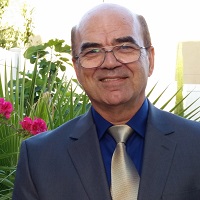 Hassan Ghoudjehbaklou, Ph.D. Electrical Engineering
Principal Engineer of Transmission Planning Generation Interconnection SDGE (2012-present)
Hassan Ghoudjehbaklou, Ph.D., P.E. is an expert in planning, design, implementation, testing and training of many advanced power systems applications including network analysis, distribution management systems, short term load forecasting, unit commitment and voltage stability analysis, power systems modeling, engineering studies under steady states and dynamic conditions. Other expertise areas include mastery of GE PSLF, PTI PSS/E, Power Tech VSAT, ABB Grid View, and ASPEN oneliner Short Circuit; PI Client applications and GE EPCL, PERL, Python and VBA scripting languages, FERC/NERC/WECC/CAISO system performance, reliability and planning standards, CAISO GIP and LGIA/SGIA tariffs.
Related Courses

Distributed Renewable Energy Resources
- Units
- 3.00
- Cost
- $845.00

Microgrid Design, Economic Optimization and Simulation
- Units
- 3.00
- Cost
- $845.00
Mixed Signal Design
Become an expert in Mixed Signal Design with this course. Learn to design analog-to-digital and digital-to-analog converters, PLL circuits, and...
- Units
- 3.00
- Cost
- $845.00