

Interdisciplinary Marine Conservation
9 weeks. More than 60 interdisciplinary experts. Real solutions.
About the Interdisciplinary Marine Conservation Program
Advanced Certificate offered in partnership with Scripps Institution of Oceanography

Immerse yourself in a 9-week, in-person journey of discovery and exploration into the intricate world of marine conservation. Offered in partnership with Scripps Institution of Oceanography, this program provides participants the opportunity to earn an advanced certificate, study alongside master’s students, and complete 16 units of graduate-level credit. The program offers a curated, interdisciplinary examination of the ocean, as well as the wildlife and communities who rely upon it. Each week addresses a distinct area of study—science communication, biodiversity, ecology and conservation ethics, oceanography and geology, governance, economics, film, and a field-science week on Catalina Island.
Grounded in the program’s core values of interdisciplinary, solution-oriented conservation, the course combines lectures, labs, discussions, fieldwork, and workshops led by faculty and external practitioners. Students develop analytical, methodological, and professional skills by integrating diverse disciplinary perspectives and applying them to real-world ocean challenges. Through collaborative projects and field-based experiences, participants strengthen their ability to design and contribute to creative, effective, equitable marine conservation efforts, culminating in the award of an advanced certificate.
The summer experience consists of one comprehensive course that includes both in-person lecture and lab components.
- Apply early! Decisions will be made on a rolling basis, as space allows.
- Priority consideration: Apply by January 29, 2027
- Applicaion window closes April 30, 2027
For questions about the program content, please contact:
Hannah Tannenbaum: hmtannenbaum@ucsd.edu
For questions around the program application process please reach out to:
Stefania Wright: unex-environmental@ucsd.edu
International Students: please visit our University Credit webpage for detailed information, student resources, and to apply to the Interdisciplinar Marine Conservation Summer Program.
Program Highlights
- Located on beautiful Scripps Institution of Oceanography campus adjacent to a state marine protected area and across from Southwest Fisheries Science Center (NOAA office), you'll have access to diverse resources and opportunities for hands-on learning.
- Learn from 60+ professors, instructors, experts, coaches, and real-world practicitioners in various disciplines, including marine biology, ecology, oceanography, geology, climate sciences, governance, law, tribal stewardship, justice, communities, ethics, economics, filmmaking, and more.
- The program includes a range of hands-on experiences, such as: expert-led fieldtrips to Torrey Pines SP, San Dieguito Lagoon, Kendall-Frost Marsh Reserve; research cruise on R/V Robert Gordon Sproul; practical and applied lab sessions in geology, fish, algae, plankton, and more.
- Additional perks include behind-the-scenes guided tours of Scripps Institution of Oceanography Collections, Birch Aquarium, campus Makerspace, NOAA facilities, and a WAVE lab, as well as a 6-day fieldwork trip to USC Wrigley Field Station Catalina Island.
Become an Expert Science Communicator
- Learn how to tell compelling stories that make science and policy accessible. Craft messages that resonate with your audience and compel conservation action. Walk out of the course an expert in science communication.
Program Objectives
- Introduce (and reacquaint) students to several fields of study relevant to marine conservation in order to build fundamental knowledge, skill sets, and deep understanding.
- Explore marine biodiversity, conservation, and global change through the lenses of natural sciences, economics, governance, ethics, and communication.
- Understand the linkages among various disciplines to address real-world ocean conservation challenges.
- Create opportunities to learn and understand multiple perspectives on complex, multi-dimensional marine conservation issues.
This is a single summer course comprised of both lecture and lab components, offered as co-registered classes. While students register for two course numbers, the lecture and lab together are treated as one integrated academic experience.
Required Courses
Students must complete both required courses.
Additional Program Information
Program Overview
This intensive 9-week, in-person summer program, offered in partnership with Scripps Institution of Oceanography, combines graduate-level coursework with immersive, hands-on learning. Participants study alongside master’s students while earning 16 units of graduate-level credit and an advanced certificate upon completion. The curriculum integrates lectures, labs, discussions, fieldwork, workshops, and applied exercises led by university faculty, external practitioners, and leading experts across disciplines including ecology, biodiversity, economics, and governance. Through interdisciplinary assignments and a collaborative capstone project, students apply scientific, social, and policy perspectives to real-world marine conservation challenges.
Program Instructor
Meet Your Summer Instructor — Anna Zivian, PhD
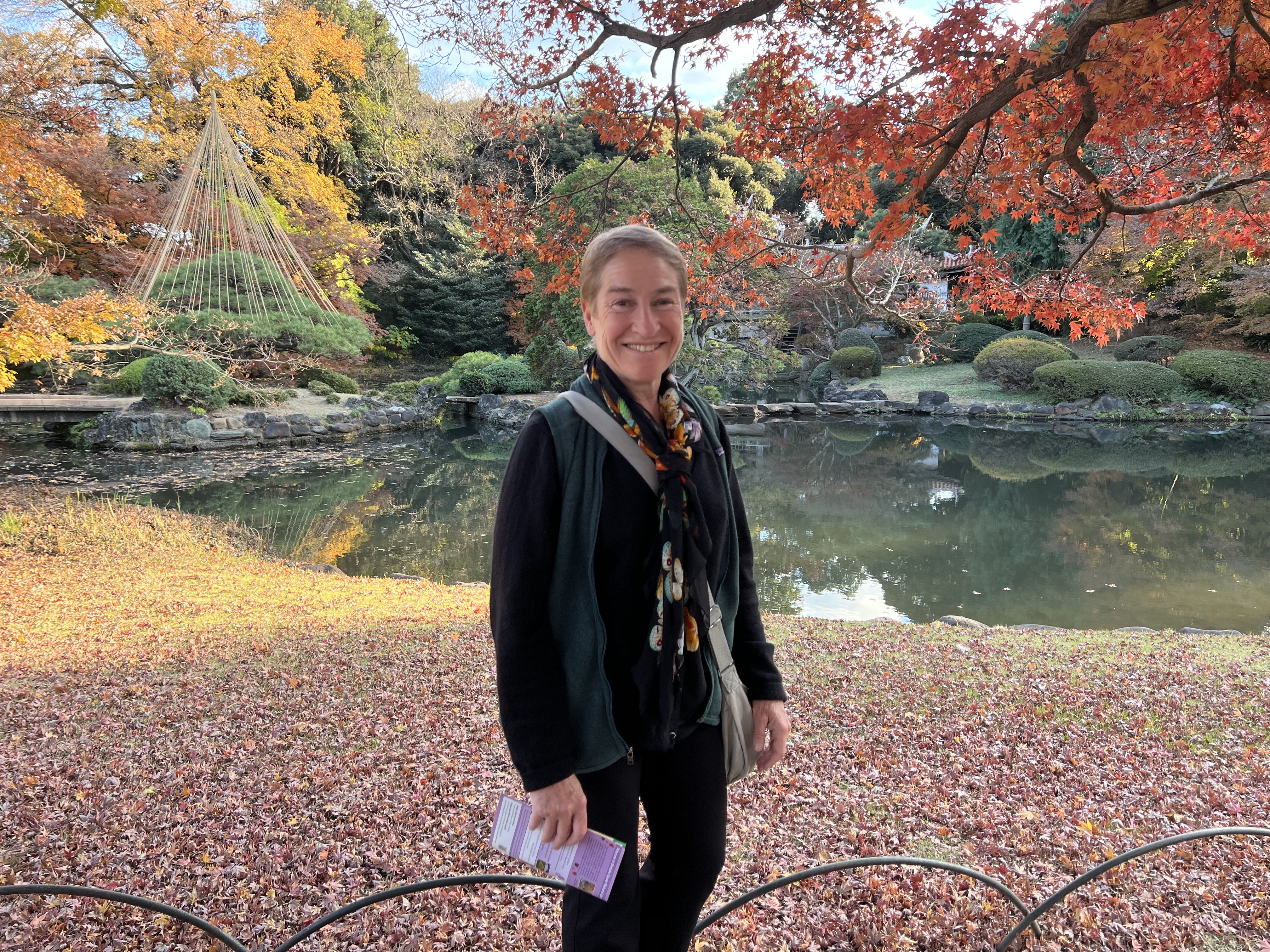
Anna Zivian is a researcher and policy expert with over 30 years experience in areas including local government, environmental and food policy, climate change, ocean and coastal issues, and equity and justice. She is currently an affiliated researcher with Ocean Nexus, working on ocean justice. In her previous work as Senior Research Fellow an Ocean Conservancy, she led the creation of the Roger Airliner Young Marine Conservation Diversity Fellowship. Prior to her work on the ocean, Anna served as an elected official in Colorado for ten years.
Sample Weeks
Every week of the course dives into a different theme — from marine ecology to ocean governance to science communication. The specific mix of activities shifts from year to year, but here's the flavor of what to expect.
A week on ocean law and policy, mixing lecture, guest practitioners, and panel discussions — building toward a mock hearing that pulls the week together.
| Morning | Afternoon | |
|---|---|---|
| Monday |
Introduction to ocean law and the basics of government. |
Case study on a current policy issue (e.g. offshore energy or climate litigation), assignment overview. |
| Tuesday |
Lecture on federal fisheries law and policy in practice. |
Case study on equity and access in fisheries management, followed by a panel with practitioners. |
| Wednesday |
Lecture on international or global-scale ocean governance. |
Case study on climate policy at the local, state, or federal level, followed by a roundtable on advocacy. |
| Thursday |
Lecture on representation, Tribal Stewardship, and governance. |
Case study on a current policy solution or emerging issue (e.g. carbon removal, data sovereignty). |
| Friday |
Mock Senate committee hearing — students argue a real ocean policy issue as senators, witnesses, and advocates. |
Debrief, or open time. |
Guest speakers throughout the week include policymakers, agency staff, and practitioners from fisheries councils, NGOs, and advocacy organizations. Several sessions include an optional networking session on careers in ocean policy.
A week centered on the diversity of marine life, moving from molecular methods to whole organisms, paired with a hands-on lab or collections session most afternoons.
| Morning | Afternoon | |
|---|---|---|
| Monday |
Introduction to the tree of life and how marine biodiversity is studied. |
Foundational lab work, often connected to molecular methods or fish identification. |
| Tuesday |
Lecture on marine microbiology or deep-sea ecology. |
Ichthyology lab, or a tour of SIO's natural history collections. |
| Wednesday |
Lecture on marine genetics — sea turtles, marine mammals, or similar case studies. |
Invertebrate or pelagic ecology lab. |
| Thursday |
Lecture on biodiversity and conservation ethics, or polar/Antarctic biodiversity. |
Algae diversity lecture and lab. |
| Friday |
Closing lecture or lab session. |
Additional lab work, or a tour of a research collection or aquarium. |
Guest speakers throughout the week include SIO faculty, collection managers, and researchers from partner institutions like NOAA.
A multi-day field station intensive at a field station, replacing the standard campus schedule. Students and faculty live on-site and rotate through survey techniques used in real marine research.
| Morning | Afternoon | Evening | |
|---|---|---|---|
| Sunday–Travel Day |
Depart San Diego, arrive at the field station, safety briefing, gear check. |
Welcome lecture, introductory snorkel and site exploration. |
Lecture on the geology of the island, followed by a natural history and climate lab. |
| Monday |
Benthic survey techniques, snorkeling transects and quadrats. |
Fish species ID and survey methods, snorkel fish surveys. |
Night snorkel. |
| Tuesday |
Introduction to plankton, daytime plankton lab. |
Invertebrate ID, seaweed ID and swath survey methods, snorkel surveys. |
Seaweed pressing lab, nighttime plankton lab. |
| Wednesday |
Travel to a second field site for snorkel surveys. |
Open project and open-water time. |
Lecture on marine protected areas, free time on-site. |
| Thursday |
Open project time. |
Open project time and packing. |
Student presentations and a closing celebration. |
| Friday–Travel Home |
Pack up and depart. |
– | – |
This week runs on a full breakfast-to-evening schedule rather than the standard 9–4 day, and is led by SIO faculty, research staff, and alumni often alongside outside experts in fisheries and marine policy.
Interdisciplinary Marine Conservation Certificate Info Session
FAQs
- Statement of Purpose: In ~750 words, describe your interest in this field, demonstrated commitment to the ocean, and rationale for applying to the program. Please explain why you are applying to the MAS MBC Program and what you hope to achieve with this degree.
- Bachelor's degree from an accredited institution of higher education with a preferred minimum 3.0 GPA.
- Resume/CV
- College Transcripts
- Test of English as a Foreign Language (TOEFL): OR Duolingo English Test (DET) for international applicants only.
- TOEFL minimum score is 85 (iBT) or 550 (PBT), or 7 IELTS.
- DET minimum score is 120 (out of 160).
STEP 1: Click on the "Apply Now" button on the certificate page. Complete the required fields on the application. If you need a TSS student ID number, please see STEP 2 below.
Click on the "Submit" button to submit your application once completed for review and consideration. Once submitted, your application cannot be changed.
STEP 2: If you have a TSS student account, skip STEP 2. If you do not have a TSS account, go to https://extendedstudies.ucsd.edu/student-services/triton-student-system, follow the Step-by-step guide to setup a student Extended Studies login (applies to most Extended Studies students).
Students accepted into this program will take the two courses alongside Scripps Institution of Oceanography(SIO) graduate students in the Master of Advanced Studies (MAS) program in Marine Biodiversity and Conservation (MBC). The program will be completed over the established 9-week summer period (July 2- September 3, 2027), by taking the two required classes SIO-295S and SIO-295LS.
To begin your application, click on the "Apply Now" button on the certificate page. If you do not already have an Application Portal and a My Extension student account, you will be prompted to create one for each to complete your application. Once submitted, your application cannot be changed. You can track the progress of your application at My Extension.
Register at: Apply Now
Select the Program of Interest: Interdisciplinary Marine Conservation
Term: Summer 2027
Applications are open until April 30th, 2027. Applicants are encouraged to apply early as our available slots may fill. The application includes an application fee of $50 that can be paid with a major credit card. A deposit of $1,000 is required upon accepting the offer of admission. The remaining balance of US $18,995 is due by the start of the program. Payment plans are available.
Please visit this website for important information and resources for international students: https://extendedstudies.ucsd.edu/international-programs/courses-programs/university-credit-programs
Please reach out to our International Team for more information: ipadmission@ucsd.edu
Please note that admission to the MAS program is a separate process, and completion of the certificate does not guarantee admission
For information about available on-campus housing options, please visit our housing information page: https://extendedstudies.ucsd.edu/international-programs/housing-student-life/housing
Advisory Board
Samantha Murray, J.D.
Kathryn Mengerink, J.D. Ph.D.
David Kline, Ph, D.
Angela Howe, J.D.
Related Programs

Specialized Certificate
CEQA Practice
Specialized Certificate